Storm damage notice
Tarp it. Photograph it.
Then price it.
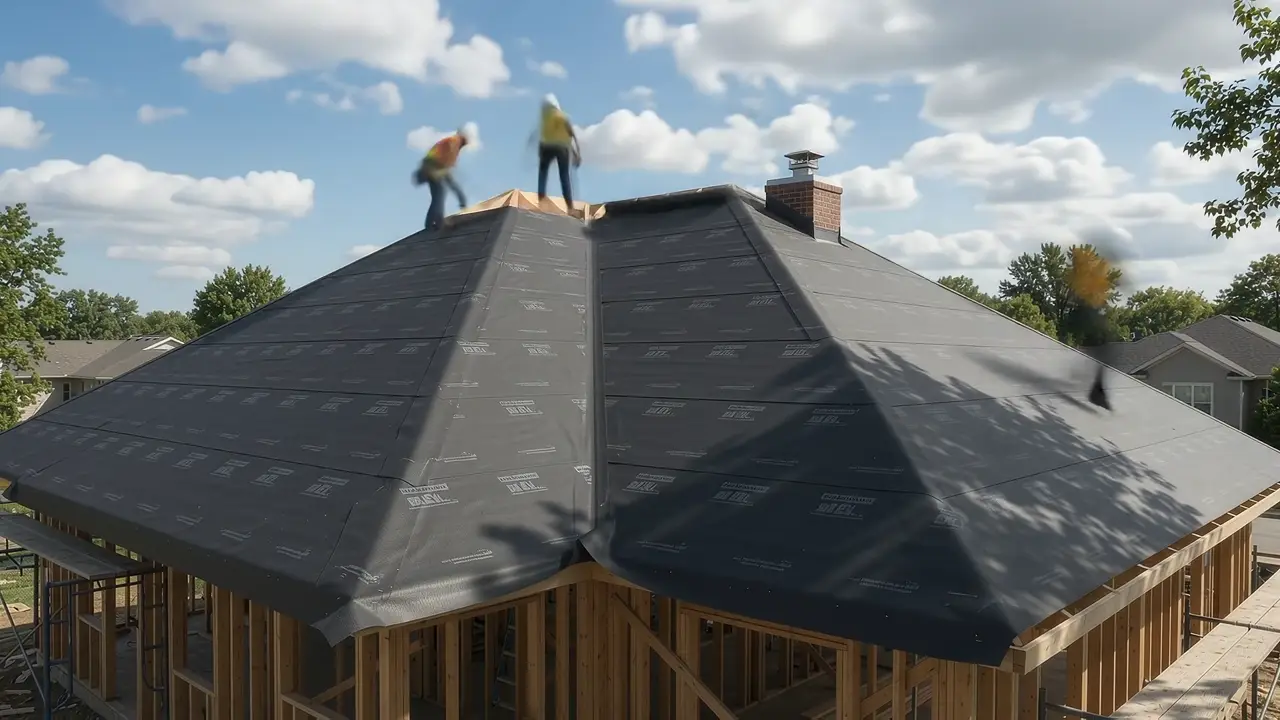
The first 48 hours
- Right now
Stay off the roof. Move anything valuable out from under the leak and put a bucket down.
- Before dark
Photograph everything from the ground: the roof, gutters, siding, dents in cars, hail on the lawn.
- Today
Call us for a tarp. Covering the hole stops the damage growing while the claim is sorted.
- Within 48 hours
Tell your insurer there was a storm. You don't need a number yet, only the date.
- Before the adjuster
Get our inspection report, so the adjuster sees every damaged slope, not just the obvious one.
Signs you can see from the ground
- Shingles in the yard, or bare patches you can see from the street
- Dents in gutters, downspouts or the metal vents on the roof
- Dark grit collecting where the downspouts empty
- A new stain on a ceiling or at the top of a wall
- Daylight in the attic where there wasn't any
- Flashing lifted around the chimney
The insurance part
Hail and wind damage is usually a claim, not a bill. We meet the adjuster on the roof, hand over dated photos of every slope, and price the work to the same line items your insurer uses.
You pay your deductible. We don’t start until you’ve seen the scope in writing.
Send photos, get a call back
Storm requests go to the front of the line.